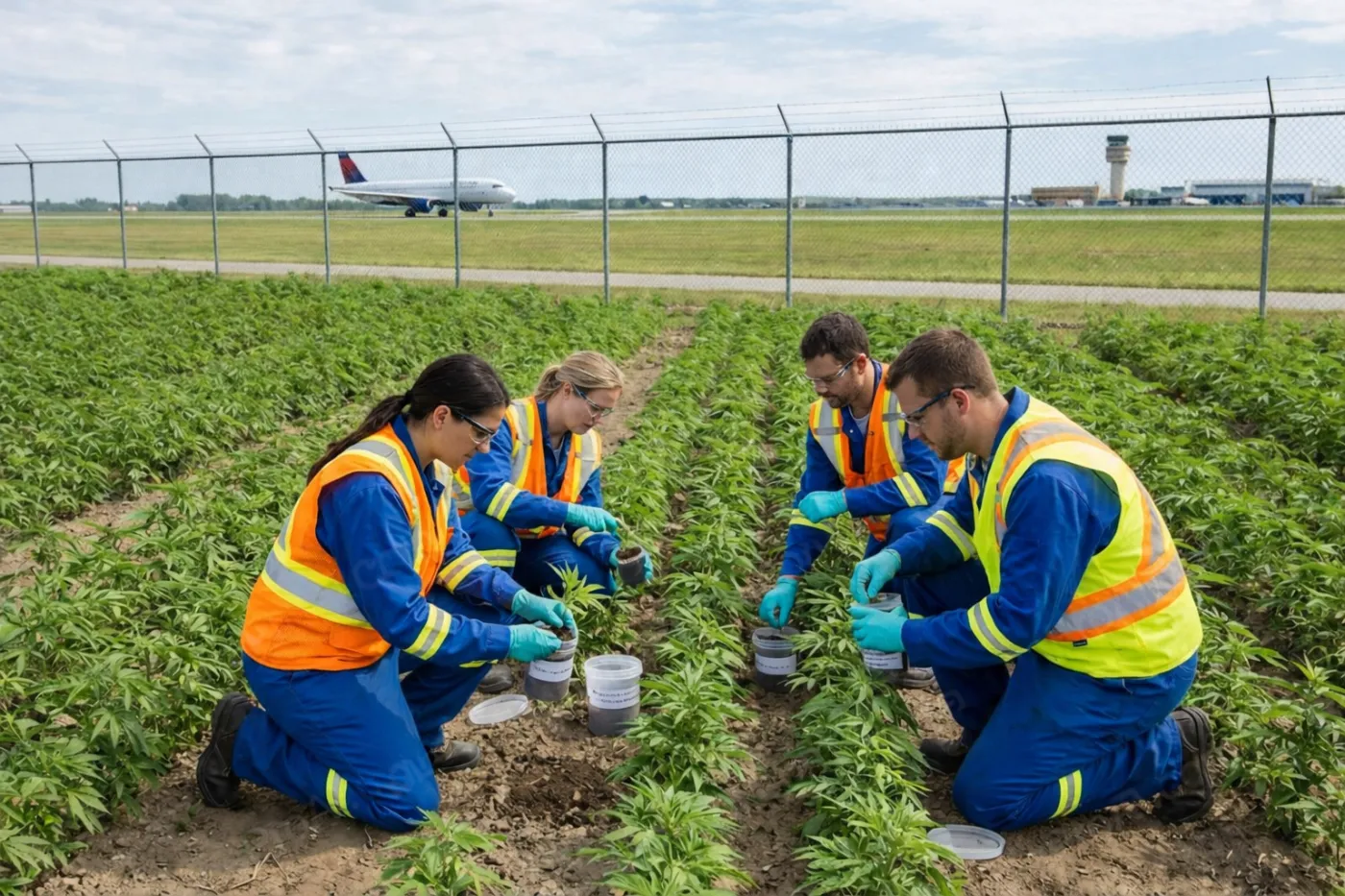

PFAS, the so-called “forever chemicals”, are already part of life in Australia and New Zealand, whether or not most people realise it.
Publicly available maps of reported PFAS sites show that contamination is not confined to remote defence bases. The largest clusters sit around major population centres, including Sydney, Melbourne, Perth, Brisbane and the Gold Coast, and Adelaide, with further sites across Tasmania, North Queensland and New Zealand.
From modern miracle to legacy problem
The first of these chemicals was discovered by accident in 1938. PFAS went on to help create modern life as we know it: non-stick cookware, waterproof clothing, stain-resistant fabrics, food packaging, cosmetics and, most notably, the firefighting foams used for decades at airports and defence sites.
The durability that made them useful is now the problem. PFAS do not readily break down. They move from soil into groundwater, rivers and drinking water, from everyday products into drains and waterways, and from the environment into the food chain.
Why it matters
Biomonitoring studies around the world have found PFAS in the blood of most people tested. In 2023 the International Agency for Research on Cancer classified PFOA as carcinogenic to humans and PFOS as possibly carcinogenic to humans. Australian health authorities advise that, as a precaution, exposure to PFAS should be minimised.
The real gap is measurement
For Australia and New Zealand, the issue is not that PFAS exist. It is that monitoring, reporting and accountability remain inconsistent. A map can show where contamination has been reported, but it cannot show how far it has spread or how many hectares are affected.
Real progress needs structural change:
- routine, consistent PFAS monitoring of drinking water, not only at known hotspots
- harmonised thresholds and testing methods
- practical remediation pathways that can be deployed and independently verified on real sites
You cannot reduce what you do not measure, and you cannot rebuild community trust when people are the last to find out.
Where HFA fits
HFA’s PFAS work is delivered through Phytogen Solutions, its joint venture with ENV Solutions, pairing high-biomass industrial hemp genetics with environmental delivery capability. The approach has been validated in C-Biotech’s European field trials, with results verified by SGS Belgium. Australian validation is underway.