
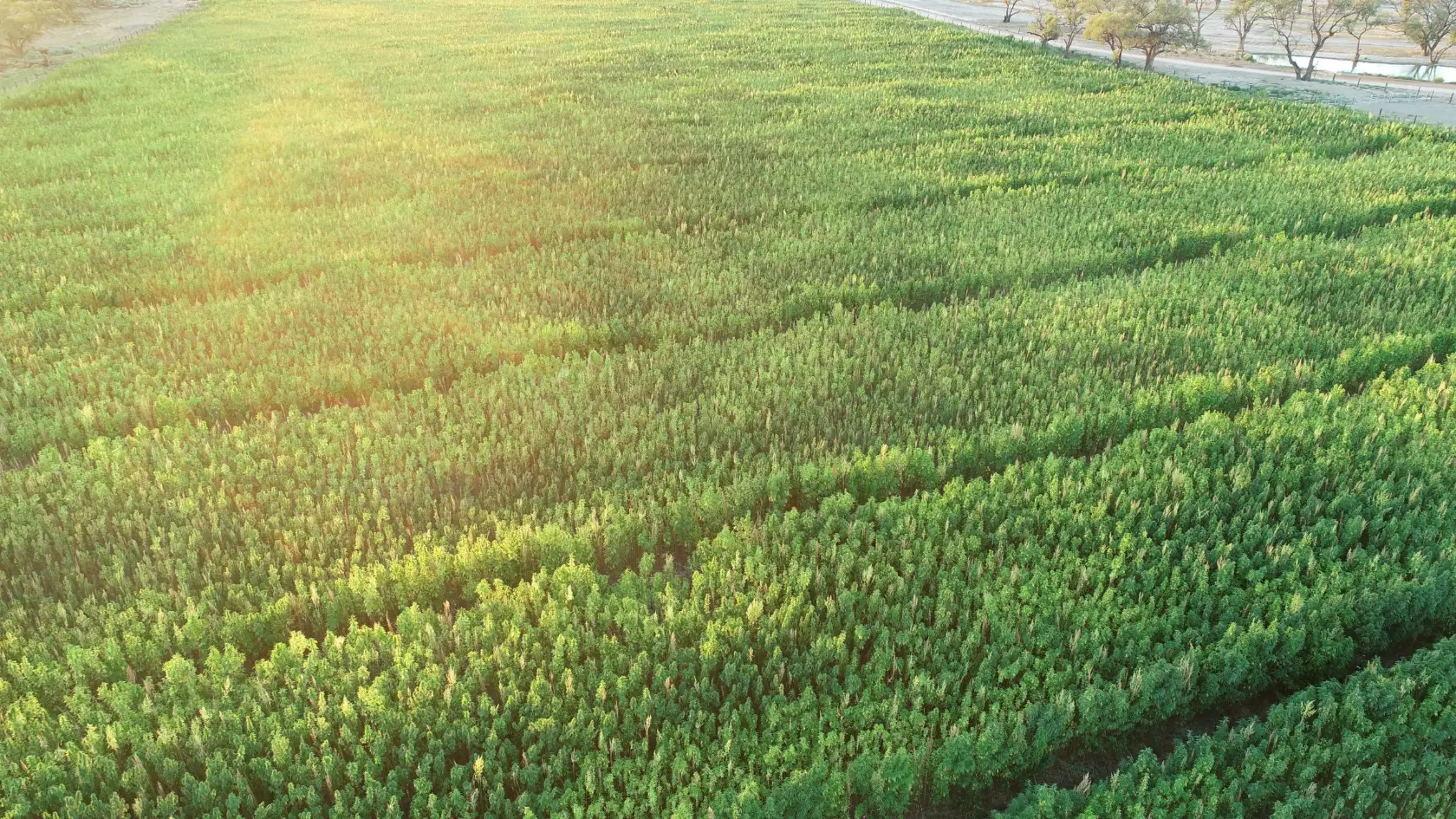
Hemp Farms Australia · Est. 2013 · Queensland
Australian-bred industrial hemp genetics.
Registered industrial hemp seed, proven field performance and hands-on agronomy support for growers, processors and researchers across Australia and overseas.
Choose your path
Three ways in, one standard.
We work with growers, seed buyers, processors and researchers across Australia, the USA, New Zealand, Belgium and Spain.
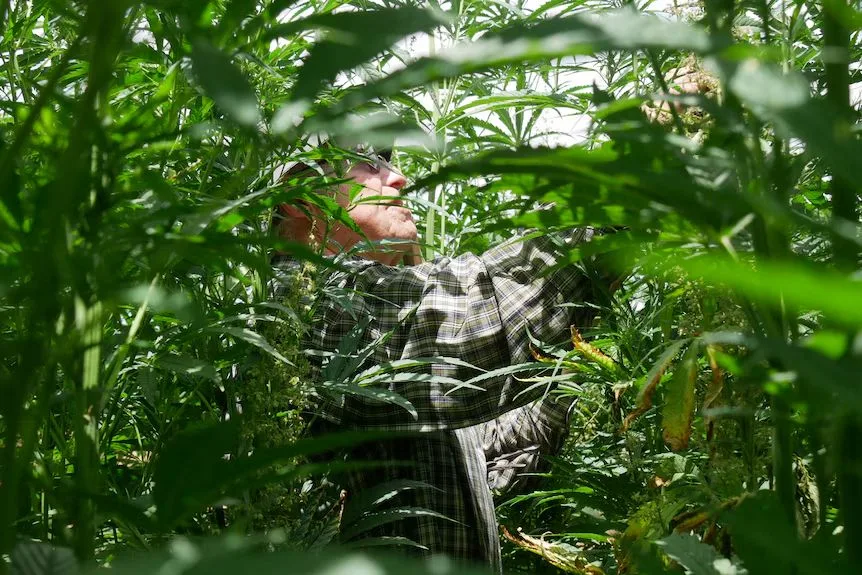
I’m a grower
Match a cultivar to your region, soil and end market for fibre, grain or dual purpose, with guidance from licence basics through to harvest.
Explore grower resources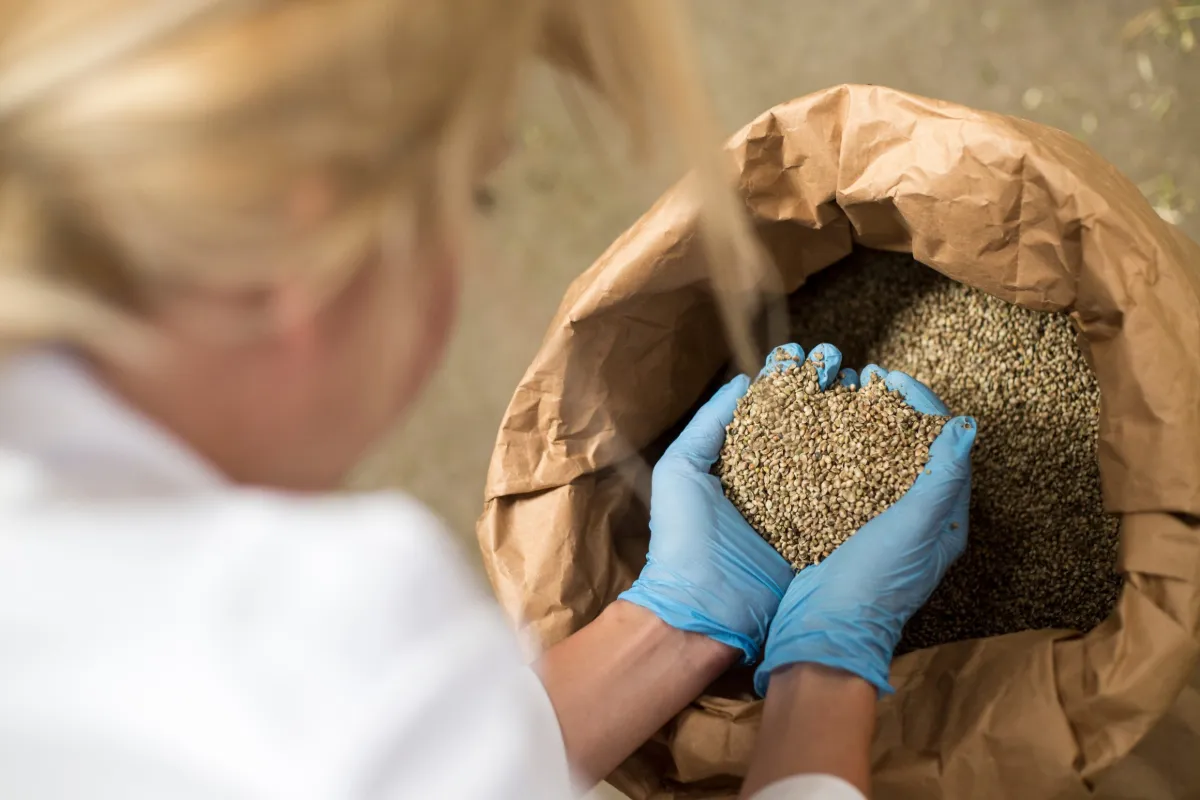
I need seed and genetics
Registered industrial hemp seed with published performance data, backed by Australian breeding that began in 1996.
View seed options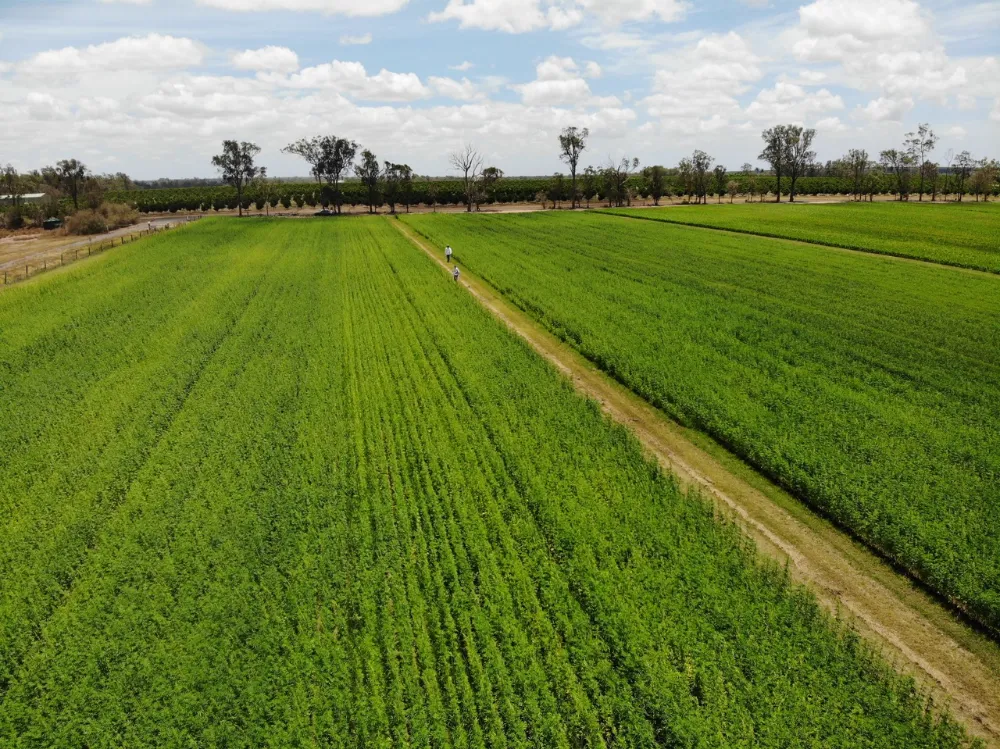
I’m exploring PFAS remediation
Hemp-based phytoremediation for PFAS-affected sites, delivered through Phytogen Solutions and assessed site by site.
Explore the approachWhy Hemp Farms Australia
Confidence built on substance, not noise.
Our credibility comes from combining hands-on agricultural understanding with research-driven thinking and industry alignment. Genetics is the platform. Everything else we do is an application of it.
- Partner and stakeholder collaboration, from first call to harvest
- Field trial and research-informed decision making
- Professional standards across cultivation and innovation
Our varieties
Performance-tested for Australian conditions.
Every HFA variety is selected for a specific end use, latitude band and growing window. Open a cultivar for its full profile, or compare all four side by side below.
01Ruby
Dual-purposeBred in the Bundaberg region in 1998. Sow September to November for a dual-purpose crop, January to March for a higher grain share, or May to August as a winter crop.
Ruby is an Australian industrial hemp cultivar bred in 1998 in the Bundaberg region of Queensland. As a dual-purpose variety it can be sown throughout Australia before Christmas (September to November) for a dual-purpose crop, or early in the year (January to March) for a higher percentage of grain relative to biomass. The winter sowing window runs from May to August, with a crop cycle of 80 to 95 days. Ruby has been grown successfully in rotation with other intensive crops, such as cotton and corn.
Best fit: Growers focused on consistency and scale
Key features
- Bred in the Bundaberg region, Queensland, in 1998
- Sow September to November for a dual-purpose crop
- Sow January to March for a higher grain share relative to biomass
- Winter sowing window: May to August, 80 to 95 day cycle
- Grown successfully in rotation with cotton and corn
Crop cycle by sowing season
- Summer sown
- 120 days
- Winter sown (May to August)
- 80–95 days
Variety characteristics
- Grain yield
- 1,200–1,400 kg/ha
- Fibre yield
- 6,000–8,000 kg/ha
- Crop cycle
- 120 days summer
80–95 days winter - THC
- Under 0.10%
- CBD
- Under 0.1%
- Seed size
- 3.5–4 mm avg
02King Gee 2
Fibre · hurdDeveloped in Australia in the 1990s. High biomass and late flowering make it well suited to fibre and hurd, reaching up to five metres.
King Gee 2 is an industrial hemp cultivar developed in Australia in the 1990s, known for its high biomass and late flowering traits, which make it well suited to fibre and hurd production. It can be planted between September and December and typically flowers in April, reaching up to five metres in height after around 90 days of growth. The cultivar performs well across diverse Australian climates, consistently producing strong fibre and hurd yields.
Best fit: Mixed cultivation environments and PFAS projects
Key features
- Developed in Australia in the 1990s
- High biomass and late flowering
- Plant September to December; typically flowers in April
- Up to five metres tall after around 90 days of growth
- Strong fibre and hurd yields across diverse Australian climates
- Hurd-dominant biomass
Regional maturity
- North Queensland
- 125 days
- South East Queensland
- 130 days
- Central NSW
- 135 days
- Victoria
- 135–140 days
Variety characteristics
- Grain yield
- 1,100–1,200 kg/ha
- Biomass yield
- 17,000–20,000 kg/ha
- Crop cycle
- 130–140 days
- THC
- Under 0.20%
- CBD
- Average 6%
- Seed size
- 5–6 mm avg
03Woongarra Fibre +
Fibre · biomassA fibre line selected within our Farnsfield cultivar. Tall, high yielding and minimal branching, ready for harvest in roughly 120 days.
Woongarra is a unique fibre line identified within our Farnsfield cultivar. It emerged as a dominant, later flowering variety with strong phenotypic attributes: tall growth, high yield potential and minimal branching from the core stems. Woongarra is HFA’s fastest fibre production variety, reaching optimal yield and an ideal fibre-to-hurd composition for harvesting within approximately 120 days.
Best fit: Fibre, biomass, fast-growing programs and PFAS projects
Key features
- Fibre line selected within the Farnsfield cultivar
- Later flowering, tall growth and high yield potential
- Minimal branching from the core stems
- HFA’s fastest fibre production variety
- Approximately 120 days to optimal yield and fibre-to-hurd composition
- Fibre-dominant biomass
Regional maturity
- North Queensland
- 120 days
- South East Queensland
- 125 days
- Central NSW
- 125 days
- Victoria
- 130 days
Variety characteristics
- Grain yield
- 800 kg/ha
- Biomass yield
- 16,000–18,000 kg/ha
- Crop cycle
- 120–130 days
- THC
- Under 0.05%
- CBD
- Under 0.1%
- Seed size
- 3.5–4 mm avg
04Bundy Gem
Grain · short seasonThe shortest crop cycle and the highest published grain yield of the four cultivars listed here.
Bundy Gem completes its cycle in 90 to 110 days, with published grain yields of 1,500 to 1,700 kg/ha. Ask us for the full cultivar profile and regional maturity guidance for your block.
Variety characteristics
- Grain yield
- 1,500–1,700 kg/ha
- Fibre yield
- 5,000–6,000 kg/ha
- Crop cycle
- 90–110 days
- THC
- Under 0.01%
- CBD
- Under 0.1%
- Seed size
- 4–5 mm avg
Variety comparison
Open our varietal catalogue (PDF)| Variety | Grain yield | Fibre / biomass yield | THC | CBD | Crop cycle (80 to 140 days) | Seed size |
|---|---|---|---|---|---|---|
| Ruby | 1,200–1,400 kg/ha | 6,000–8,000 kg/ha | Under 0.10% | Under 0.1% | 120 summer · 80–95 winter | 3.5–4 mm |
| King Gee 2 | 1,100–1,200 kg/ha | 17,000–20,000 kg/ha biomass | Under 0.20% | Average 6% | 130–140 days | 5–6 mm |
| Woongarra Fibre + | 800 kg/ha | 16,000–18,000 kg/ha biomass | Under 0.05% | Under 0.1% | 120–130 days | 3.5–4 mm |
| Bundy Gem | 1,500–1,700 kg/ha | 5,000–6,000 kg/ha | Under 0.01% | Under 0.1% | 90–110 days | 4–5 mm |
Figures are HFA’s published variety data. Yield and maturity vary with location, season and crop management, so talk to us about suitability for your block. King Gee 2 and Woongarra Fibre + yields are total biomass: King Gee 2 is hurd-dominant and Woongarra Fibre + is fibre-dominant. Seed size is the average. Regional maturity bars are drawn against a 140-day scale.
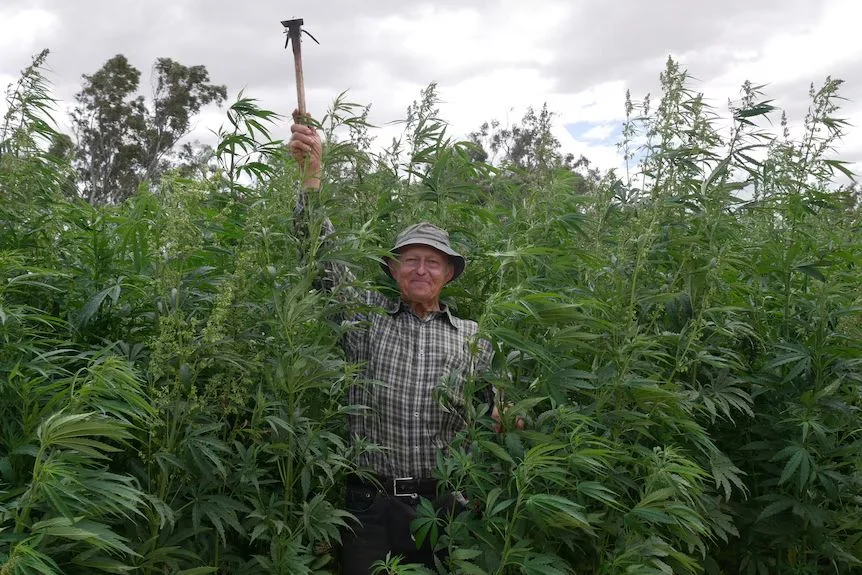
Not sure which cultivar fits your paddock?
Tell us your region, soil and end market. We will match the cultivar, then help you plan the pathway to a buyer for fibre, grain or hurd.
How it works
Three steps to a confident paddock.
- Step 01
Choose the right variety
We match cultivars to your region, soil and market using our internal Genetics.ai model, built on HFA’s historical performance database.
- Step 02
Get expert support
Agronomy guidance from experienced Australian hemp professionals: sowing rates, nutrition, weed control and crop monitoring through the season.
- Step 03
Plant with confidence
Quality seed backed by performance data, with ongoing support through to harvest and end-market pathways.
PFAS phytoremediation
A partnership built for real-world delivery.
PFAS are persistent by design and difficult to remediate. Through Phytogen Solutions, our joint venture with ENV Solutions, we pair HFA hemp genetics and agronomy with environmental delivery and C-Biotech’s licensed biological input. Every site needs its own technical, regulatory and operational assessment.
In C-Biotech’s Campus Vesta field trials in Belgium, a proportion of plots were brought below the Flemish remediation norm of 3.8 µg/kg dry matter, validated by SGS Belgium.
Australian field validation is in progress. We make no Australian efficacy claims until that work is complete.
- Airports and aviation landholders
- Industrial and infrastructure sites
- Environmental consultants
- Landowners and site operators
Trusted across the industry
Backed by research and leading institutions.
Decades of research and working relationships with Australian and international organisations.
Active field trials across Australia
Cultivars tested in rotation and across diverse climates.
Referenced in Senate inquiries
Contributing to national hemp industry discussions.
Published research and data
Performance datasets that inform every variety recommendation.
Government and university partnerships
Work undertaken with public and academic institutions.








Need help choosing the right hemp variety?
Send us your region, soil and end-market goals, and we will help you match the right cultivar and plan your season.